Headlines News :
Showing posts with label Gadget. Show all posts

The Age of the Pico Projector is Upon Us (For Real This Time)

Written By Fantasya on Tuesday, May 1, 2012 | 2:51 AM


MicroVision PicoP Gen2 Demo Device
There’s always been a lot to love about a pico projector. A palm-sized device that can port video from anything from a laptop to an iPod onto a large projected screen? Sign me up. Until now, though, picos only came is two forms: as a standalone box, or strapped onto the back of a device like a smartphone, rendering the gadget bulky and extremely power inefficient. Enter MicroVision’s PicoP Gen2 projector, debuting this week. The PicoP Gen2 is among the smallest pico system we’ve seen, and it’s incredibly power efficient--perfect for embeds in multi-function devices. Oh yeah, and it’s 720p high-def, too.

To start, the entire PicoP Gen2 setup is wafer-thin (about 6 millimeters)—I’d wager about half the size of the gen-one product. But MicroVision has crammed much, much more onto that small piece of hardware. The addition of a green laser (in addition to red and blue ones) brings the color gamut up to 64,000, while MicroVIsion’s newly-updated mirrors reflect up to 25 lumens. The kicker, of course, is the ability to project a 720p image as large as 20 feet across.

It’d be quite a shame for all that power to go to waste in simple standalone projectors. Naturally, MicroVision is talking to a number of OEM partners to get the PicoP Gen2 into more devices later in 2012, but there’s no official comment as to what, when, and how much. The company’s reference designs, though crude (read: projector setups literally strapped onto existing devices), do get the point across. First up was a PicoP attached to a Roku XS box, which could become a roving Netflix and Hulu showcase, if not a way to play large-screen Angry Birds anywhere. The company also showed us an OnLive cloud gaming demo; with a projector resting atop an Onlive console—itself about the size of a hard drive—the makeshift system became a mobile arcade theater.

Knowing that the PicoP Gen2 will likely project onto some rather rough walls and shabbily-hung sheets, MicroVision engineered the system to display consistent images on any surface. The engine, unlike most mobile projector solutions, renders each pixel of its 720p image one-by-one, which means that the image won’t warp if it’s on an uneven surface; pixels will land flush on whatever they hit. MicroVision showed us a quick demo of this using a 360-degree magic-carpet game; the player stands in the middle of the room, floating the rug and rider across the walls, floor and ceiling. As promised, the image never fractured or lost integrity.
Aside from smoothing images on rough surfaces, the PicoP’s pixel-by-pixel image-rendering allows for quick projected touchscreens. When a user points at the projected image with a stylus, the projector interprets the point as a mouse-click. Because it is seeing which pixel path has been interrupted, instead of constantly mapping the image plane as similar devices do, the PicoP requires no calibration to work. This mapping system is also less taxing on the processor, so whatever device the projector is emended into will still have somewhat decent battery life.


MicroVision PicoP Gen2 Touchscreen Demo:
MicroVision expects products running the PicoP Gen2 projector to begin hitting the market in the second half of 2012.

http://www.popsci.com/gadgets/article/2012-01/age-pico-projector-upon-us-real-time

What Do Your Apps Know -- and Say -- About You?

Written By Fantasya on Sunday, April 29, 2012 | 2:46 AM


What Do Your Apps Say About You? via WSJ
What do you smartphone apps say about you? Not in the “who am I and what is my place in the world?” sense, but literally--what are your apps telling other people about you? Your location? Your identity? Your username and password? The Wall Street Journal has put online a pretty amazing, sometimes outraging, definitely interesting interactive graphic analyzing 101 popular iPhone and Android apps, telling you exactly what your apps are telling other people.

Those other people can be the application owners themselves, or they can be third parties like marketers or ad providers like Google AdSense. Different apps share different info with different entities. Some, like Tweetdeck, make sense--it shares information with Tweetdeck itself as well as things that interface with Tweetdeck, like Facebook, Imageshack, bit.ly, and--of course--Twitter.

Others are a bit more questionable. For instance, did you know that Pandora--according to WSJ--is sharing various information from your phone with eight different third parties? We didn’t either, but we hope it’s sharing our listening preferences as well so all that incoming marketing will at least be sonically pleasing. Take a spin through the interactive graphic at WSJ to see exactly what your apps are saying about you.
  
http://www.popsci.com/gadgets/article/2012-02/interactive-graphic-breaks-down-everything-your-apps-know-and-say-about-you

Smartphones Will Become the Only Device Hardcore Gamers Need

Written By Fantasya on Friday, April 27, 2012 | 2:41 AM


The Pocket Console Alison Seiffer
When Sony, Microsoft or Nintendo introduces a new videogame console, its obsolescence within six years is more or less assumed. Nintendo is likely to release the new Wii U later this year, and other console makers are rumored to be working on next-generation systems. But as early adopters line up to experience whatever new high-def graphics those systems may offer, the next-next generation of console is already gaining momentum. The device is the smartphone, and within a decade it could be powerful enough to replace conventional game systems for good.

Mobile gaming began in 1979 when the Milton Bradley Company introduced the Microvision cartridge-based system. Since then, Nintendo, Sega and Sony have released many more portable systems, from the Game Boy to the recent quad-core PlayStation Vita. Although many of these devices were a great success among gamers (to date, Nintendo has sold more than 50 million of its DS systems), they never gained a substantial following among the general public.

Then in 2008, Apple launched the App Store, providing a simple and accessible distribution platform for games. One year later, the company Rovio released Angry Birds. Within a year, 50 million people had downloaded the app, spurring developers to create more engaging portable games. Now 64 percent of smartphone owners download games, and 37 percent of iPhone owners say they play daily.
Smartphone games are still a far cry from the richly textured and fast-moving console experiences that hard-core gamers love, but that could change rapidly. Today’s fastest phones already have quad-core 1.5-gigahertz processors—a fraction of the horsepower of a PlayStation 3—and others can send full 1080p high-def to a TV over HDMI. Mobile processors are hitting the steep part of the Moore’s Law curve, where power increases sharply with every year. One day soon, a five-ounce phone’s specs could rival those of the current best laptop.

Such a sharp increase in mobile power will most certainly provoke further attrition in the gaming ranks. Android and iOS already claim 58 percent of the portable-gaming market, and console game sales are on the decline. But for smartphones to gain dominance, users will need better ways to access console-level games. Either cloud-based delivery services will license a broader range of titles, or flash memory will improve to the point that a phone can store many console games (at present, one game could consume half a typical phone’s 16 gigabytes of memory).

Once the barriers to access fall, though, the phone will become a dual-purpose game hub. Mobile gamers will probably continue to rely on app-based games—who would want to play Skyrim on a four-inch screen, anyway?—but home gamers will have a dramatically different experience. Rather than firing up an Xbox or PlayStation, they will pair their phones with their TVs and wireless controllers. Discs will become obsolete, shelf space in the home entertainment system will open up, and users will carry a self-contained game system wherever they go.

Nokia Lumia 900 Review: Bigger Is Not Always Better

Written By Fantasya on Thursday, April 26, 2012 | 2:38 AM

Lumia 900 and iPhone The Lumia is the bigger one. Dan Nosowitz
If you want to buy a phone right now, and you're shopping based on quality rather than price, you have two choices in terms of size. You can get the iPhone, with its 3.5-inch screen, or you can choose from a handful of top-tier Android and Windows phones, all of which will have, at the bare minimum, a four-inch screen. Most of them will be bigger--4.3 inches is much more common right now, and an increasing number are even larger, including the Samsung Galaxy Nexus (4.65 in), HTC Titan (4.7 in), and the Samsung Galaxy Note (which, at 5.3 inches, is more lunchtray than phone).
The Nokia Lumia 900 is essentially a 4.3-inch version of the Lumia 800, a phone I absolutely loved in its 3.7-inch iteration (a Europe-only model). So reviewing the Lumia 900 presents an interesting question: with most other specs remaining constant, how does the experience of using a phone change when it grows to the size most phone manufacturers insist we really want?

WHAT'S NEW

The Lumia 900 is Nokia's first "flagship" Windows Phone that's available in North America (the Lumia 710, a cheapie, has been available on T-Mobile for a little while already). It's the sequel to the much-admired Lumia 800 and its changes are mostly in size (of various sorts). It's got a 4.3-inch screen, compared to the Lumia 800's 3.7-inch screen; it has 4G LTE (on AT&T), compared to the Lumia 800's 3G; it has a bigger battery and a front-facing camera.
Nokia Lumia 900 and Plaid Sheets:  Dan Nosowitz

WHAT'S GOOD

This is mostly a good phone. Windows Phone is a great operating system; it's still maturing, but it's very usable, and it's an interesting and distinctly different approach to a smartphone than iOS or Android. (More on that here.) The physical design is pretty good; it's inoffensive, at worst, and is weighty enough to feel sturdy rather than cheap and plasticky, as many Windows Phones do (especially those made by Samsung). It's also nicely thin, only a millimeter or two thicker than the iPhone. The screen, though not thrilling in its resolution, has great deep blacks, which is important when using an OS with a predominantly black interface by default.
AT&T'S 4G LTE continues to be great. This is the first phone using AT&T's LTE I've personally used, and it feels just as screamingly fast as Verizon's. It's startling how quickly things load--LTE is as fast or faster than many people's home internet connections, so apps download instantly, web pages load instantly, music and podcasts sync instantly. I was impressed with AT&T's coverage too--I used the Lumia 900 all over New York City and it never dropped out on me. And the giant 1830mAh battery will get you through a full day with normal use, which is not always the case with the current crop of LTE-capable phones.

WHAT'S BAD

Bigger is not better. Gadget makers will tell you I'm wrong--they'll point to sales numbers, saying that people have embraced big phones by the millions. But you could just as easily point to the iPhone, the most successful phone line in the country by a long shot, and say that it proves that people love smaller phones. Or you could remember that if you want a good Android or Windows phone, you are basically forced to buy a giant one. There are no longer any top-tier 3.7-inch phones. There are a rapidly decreasing number of 4-inch phones (the Motorola Droid 4, an above-average but not particularly special phone, is the only high-end 4-incher released in the past six months). If you're shopping Android or Windows, your choices are limited to big or bigger. And that's not necessarily for the better.
Most gadgets need to be of a particular size to fulfill their particular roles. A phone has to fit in your pocket or purse. An ebook reader has to display a page of text. A tablet has to provide a full web experience. You can't just stretch it out, like it's a Gumby made of silicon and glass and metal and plastic, and say it's a better device because of it. And that's exactly what the Lumia 900 is. The phone is big--not as big as a Galaxy Note, but big. It's actually wider and thicker than the Samsung Galaxy Nexus, a phone with a substantially bigger screen.

Nokia Lumia 900: Back and Sides: Clockwise from top left: right edge (buttons are a volume rocker, power/hold button, and camera shutter), top edge (with a headphone jack, microphone, and microUSB port, and SIM card slot), back, and bottom edge (speaker grille). Click here to get a bigger view of the other sides of the Lumia 900.  Dan Nosowitz

I have small hands (we all have our hurdles in life), and for me, any phone with a screen bigger than four inches is more difficult to use than it's worth. In regular use, I find myself constantly readjusting my grip--I can't hold the phone and reach all parts of the screen with my thumb. Beyond the overall size increase, I don't think the bigger screen has any real benefits in this case. The Windows Phone keyboard is excellent; I never found it awkward to type on the smaller Lumia 800, so unless you have the sausage fingers of Billy Joel (YouTube it, the dude has ten kielbasas attached to his palms), I can't imagine this being a striking improvement. The screen is also mathematically worse than the Lumia 800's. It's the same exact screen--a PenTile AMOLED screen with 800 x 480 resolution and Nokia's ClearBlack tech, which, if you don't understand that, congratulations for not having so much nonsense rattling around in your head. What matters is that it's the same number of pixels stretched across a larger canvas—the opposite of Apple's approach with its Retina Display—which means a visible downgrade in image quality. So on the Lumia 900, the picture is worse. It creates a bigger bulge in my pocket. What's the point?
All the buttons are on the right edge of the phone, even the power/hold button, which is often found on the top edge. That's essential, because it's not really possible for anyone besides Hakeem Olajuwon to reach the top edge of the phone while holding it with one hand. But with it placed on the side, I found myself accidentally hitting the hold switch often, since it falls directly under your right thumb.
The design is also somehow not quite as enthralling as the sleek Lumia 800, even though it's nearly identical. It's the little things, which add up to a different impression when you're dealing with a very simple design presentation. Example: the 800's screen was curved, with the screen seeming to melt off into the sides of the phone like an infinity pool. The 900 has a typical flat screen, with a more definitive bezel between the screen and the sides of the phone, and a weird raise ridge around the edges. It's a very minimalist design, which worked for the 800, because it had nice little touches and felt compact and sharp. The Lumia 900 isn't bad-looking, and it's certainly well-crafted, but it's also not that interesting.
The camera remains not very good. I was surprised at this with the Lumia 800, and I'm still surprised--the Nokia N8, probably the worst phone I've ever reviewed, had a stellar camera, and Nokia is well-known for their phone cameras. The Lumia 900's is average at best--I love that it has a dedicated shutter button, and shutter speed is pretty good, but I wasn't impressed with image quality. The Lumia often came up with very dark shots, and color reproduction was sometimes off. And in lower-light situations, photos were extremely noisy.
Nokia Lumia 900 vs. iPhone 4S: Near and Far: A couple more comparisons: the Lumia 900 took the two photos on the left, while the iPhone 4S took the two on the right. You can see that the Lumia works okay in full sunlight, but still has troubles with shadows and differences in light (look at the slanted shadow on the building to the right of the Empire State Building, or how the daffodils blend into the brighter sidewalk in the upper left corner). Click here to get a bigger view.  Dan Nosowitz
The hardware handles the Windows Phone operating system pretty nicely; it's responsive and fast, for the most part. The way it scrolls still feels not quite as organic as iOS--there's a little lag, and sometime the "flick" motion results not in a super-fast scroll, like you wanted, but a slow trudge downwards through a list. Otherwise the software has the same ups and downs (and it's mostly ups, to be clear) as any other Windows Phone, plus a few Nokia-specific apps (Nokia Drive, a free turn-by-turn GPS app; yet another mapping app, Nokia Maps; and a little Nokia-curated section of the App Marketplace).

THE PRICE

It's available on AT&T for $100 with a two-year contract. That's half the price of other 16GB phones like the iPhone, and probably a good way for Microsoft and Nokia to worm their way back into the public consciousness. It's a good deal, though given the fact that you're signing a two-year contract that'll cost you several thousand dollars in voice and data plans, it doesn't really make sense to care much about an extra $100 up front.

Nokia Lumia 900 Email App:  Dan Nosowitz

THE VERDICT

The Lumia 900 is a pretty good phone--I still think the iPhone is a smarter buy on AT&T, due to its gigantic and thriving App Store, sleeker hardware, and more polished software, but the Lumia 900 is very nice. And yet I don't think it's as good a phone as the Lumia 800 (though the LTE speeds are delightful). It's a weird feeling to be disappointed while still recommending a product, but that's how it goes--the 900 doesn't live up to my expectations, but it's still the best Windows Phone in America. Still, it feels a little dull, where the Lumia 800 felt fresh and new and stylish. But most of all, I'm turned off by the size. Dear phone manufacturers: I know it's an easy sell to say that your phone is bigger and therefore better--but for some of us, it's simply not the case.

Source : http://www.popsci.com/gadgets/article/2012-04/nokia-lumia-900-review-bigger-not-better

Why You Might Want a Multi-Core Tablet

Written By Fantasya on Wednesday, April 25, 2012 | 2:37 AM

Tablet Devices Sam Kaplan
The current and next generation of tablets are getting into a core war: three, four, even five cores are going to be popping up in your Android (and possibly iOS and Windows) tablets. But what's the point of this numbers battle?

10 Differences Between iPad 2 and The New iPad 3

Written By Fantasya on Tuesday, April 24, 2012 | 12:39 AM

Apple loyal followers, customers, and users have witnessed the transition, development, and series of modification of iPad. It became the first line of tablet computer that they have introduced in the market. It could be recalled that it was in April of 2010 when the first iPad was released wherein within 80 days where it has sold 3 million pieces. At the end of 2010, it was recorded 14.8 million were sold. Anticipation and excitement has increased of the launch of iPad 2 that happened in March of 2011 wherein they have sold more than 15 million pieces of the new unit. In fact, at the end 2011, they have recorded a total profit of $9.5 billion just for iPad alone. Now people are more zealous on the recently launched new iPad 3, which is also known as the new iPad or iPad 3. What are the things to check and differences between the iPad 2 and the new iPad 3. Check these out:
 10. Price


Top 10 Best Laptops For College students in 2012

best laptops for college students in 2012.


laptops for students Top 10 Best Laptops for College Students in 2012


top 10 best dslr cameras in 2012

Written By Fantasya on Monday, April 23, 2012 | 12:25 AM

DSLR or Digital Single Lens Reflex cameras are all the hype these days because of the image quality, the performance, and the features that you can access, all in a less costly offer that can be comparable with modern-day smartphones or laptops. And because these cameras are hot, more and more brands are producing units that differ based on quality, ergonomics, ease of use, and other attributes that both professionals and amateurs will love. Nevertheless, you may ask what the 10 best DSLR cameras are for 2012. In case you wanted to know the lineup, then checking this list would feed your need for more info.


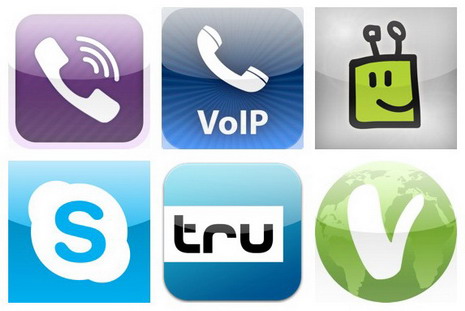
Top 10 iPhone apps to make free calls

Written By Fantasya on Saturday, April 21, 2012 | 10:17 PM

Let’s face it. Even before games, apps, and music players have been embedded to cellular phones, its main purpose, which is to make and receive calls, is still the number one reason why phones are all the rage. And with the development of internet connections over the air, WiFi, and applications that take advantage of modern technologies, there are more and more ways of enjoying old features in a newer perspective. In case you are missing out with iPhone these days, then you should know that there are 10 iPhone apps to Make Free Calls

iPhone Apps to Make Free Calls

 free calls Top 10 iPhone Apps to Make Free Calls


Top 10 Best New iPad 3 Cases and Covers

Since the iPad 2 and the new iPad 3 looks almost alike, you may think that your recent cover may be adequate with the newest tablet coming from Apple. However, looking closer at things, you may notice that the new iPad 3 is a bit thicker than the iPad 2, which may make your older covers a bit hard to fit into the freshest device. As this is the case, you may need to look at the top 10 best new iPad 3 cases and covers that can give you a sense of comfort and style with your new tablet PC.

The New iPad 3 Cases and Covers


Support : Creating Website | Johny Template | Maskolis | Johny Portal | Johny Magazine | Johny News | Johny Demosite
Copyright © 2011. World's Technology - All Rights Reserved
Template Modify by Creating Website Inspired Wordpress Hack
Proudly powered by Blogger